
INTRODUCTION
Now-a-days obesity is not only considered a cosmetic problem but also a metabolic disease. It has been linked to more global deaths than underweight and has become the 5th leading cause of death. Obesity develops when the calories consumed by the body becomes more than the calories utilized due to the lesser physical activity & more food consumption. This imbalance causes the accumulation of fat in the form of debris in the various parts of the body causing increase in body weight and other diseases. When many diseases co-exist in one body & remain untreated then, they finally result in death.
MANAGEMENT
Many management strategies can be carried out to handle obesity. These strategies help to maintain healthy body weight. The increased body weight in obesity can be managed by concentrating upon:
- Energy expenditure
- Appetite suppression
- Fat & glucose absorption blocking
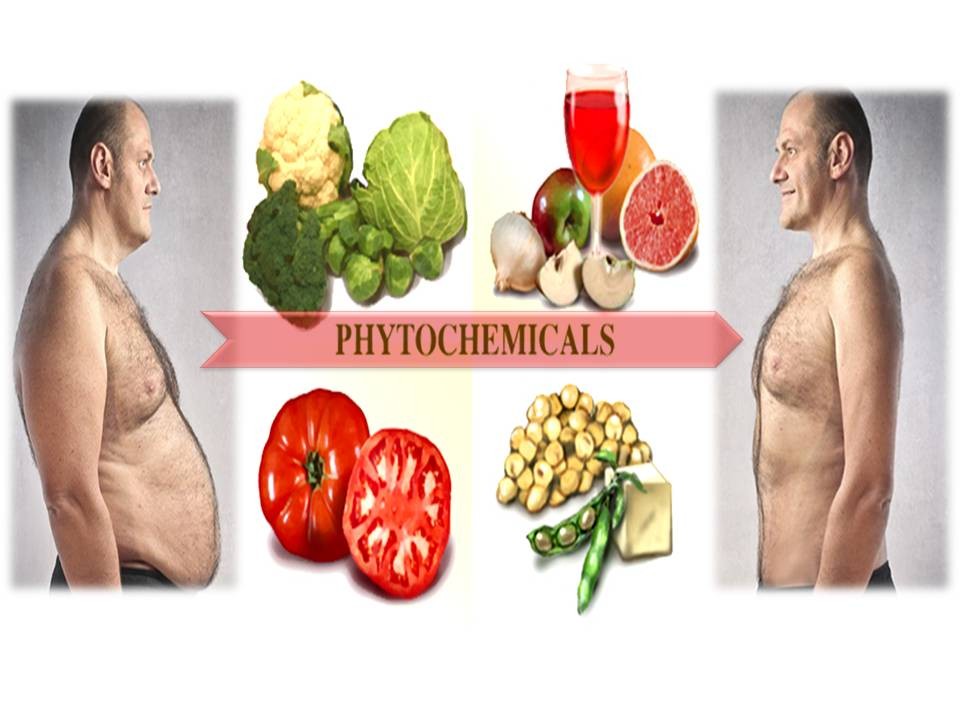
These three components can be carried into action by using natural supplements known as “Phytochemicals”. For centuries, people across the countries have been using natural products as plant-based supplements for body weight control. Phytochemicals are these plant-based supplements which are found in food items and herbal preparations where they could alter appetite beyond the effects expected by anyone.
HOW PHYTOCHEMICALS ACT INSIDE BODY?
Phytochemicals can be opted as anti-obesity agents because they may act through the following sequence:
- Suppress growth of adipose tissue (stores energy in the form of fats)
- Inhibit differentiation of pre-adipocytes (stimulated to form adipocytes)
- Stimulate lipolysis (breakdown of lipids and hydrolysis of triglycerides into glycerol and free fatty acids – removes unwanted fatty deposits)
- Induce apoptosis (cell death) of existing adipocytes
- Thereby, reducing adipose tissue mass
PHYTOCHEMICALS AND THEIR SOURCE
| Phytochemical/
active component |
Types | Mechanism of action | Source |
| Polyphenols | Phenolic acids
Stilbenes Curcuminoids Chalcones Lignans |
– Anti-angiogenic activity (modulating adipocyte metabolism) | Fruits, coffee beans, soyabeans, grapes, red wine, turmeric, curry, mustard, tea, tomatoes, whole grains, legumes |
| Flavonoids | Fruits, vegetables, apple, cocoa, grape seeds, red wine, blackberries, tea, citrus fruits, tomato, soya | ||
| Isoflavones | Soya | ||
| Terpenoids | Carotenoids
Lycopene Lutein Carotene Sesquiterpenes Abscisic acid |
– Potential to activate PPARα which is a dietary lipid sensor that regulate lipid and carbohydrate metabolism.
– Antioxidant activity (scavenge free radicals which contribute in obesity) |
Tomato, dark green vegetables, orange-yellow vegetables |
| Organosulfurs | Allyl sulfide
Allicin Allixin |
– Decrease the synthesis of cholesterol by hepatocytes through inhibition of HMG-CoA reductase (a critical enzyme in the cholesterol biosynthesis pathway) | Garlic, onion |
| Phytosterols | Protodioscin
Diosgenin Guggulsterone |
– Similarity to cholesterol helps them to compete with cholesterol for micelle formation and inhibit cholesterol absorption. | Fenugreek, white yam, caltrop, guggul plant |
REASON BEHIND CHOOSING PHYTOCHEMICALS AS AN APPROACH FOR WEIGHT MANAGEMENT
- Health benefits of weight loss without any side effects
- Less demanding than usual lifestyle changes, such as exercise and diet
- Easily available without a prescription (in the form of fruits & vegetables)
- More easily accepted than a professional consultation with a physician or a nutritionist
- 100% natural origin and it is well known that “natural means safe”
REFERENCES
- http://file.scirp.org/Html/2-2600389_21050.htm
- http://citeseerx.ist.psu.edu/viewdoc/download?doi=10.1.1.619.8501&rep=rep1&type=pdf
- https://www.researchgate.net/profile/Rathinam_Xavier/publication/268427982_Nutraceuticals_as_therapeutic_agents_A_Review/links/561c813408ae6d17308b1a16.pdf
- http://www.silae.it/files/Pharmacological_Resarch_Obesity.pdf
- http://www.mdpi.com/1424-8247/3/3/748/htm
- http://www.sciencedirect.com/science/article/pii/S0031942210002967
https://www.ncbi.nlm.nih.gov/pmc/articles/PMC2896613/
